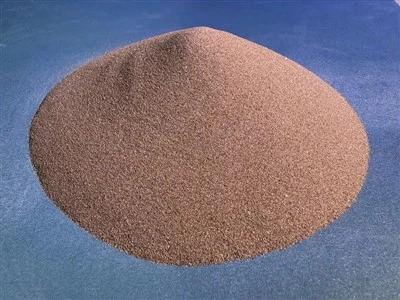
Ceramic opacifiers powder plays a crucial role in the ceramic industry, imparting opacity to ceramic products. As a leading supplier of Ceramic Opacifiers Powder, we understand the significance of comprehending the opacifying mechanism. In this blog, we will delve into the scientific principles behind the opacifying action of ceramic opacifiers powder, exploring its various aspects and applications.
Understanding Opacity in Ceramics
Opacity in ceramics refers to the ability of a material to prevent the transmission of light. This property is highly desirable in many ceramic applications, such as Sanitary Ware Raw Material, where a white, opaque appearance is often preferred. Opacity can be achieved through the use of ceramic opacifiers powder, which scatters and absorbs light, reducing its transmission through the ceramic body or glaze.
Types of Ceramic Opacifiers
There are several types of ceramic opacifiers commonly used in the industry, each with its own unique opacifying mechanism. Some of the most widely used opacifiers include zirconium silicate (ZrSiO₄), titanium dioxide (TiO₂), and tin oxide (SnO₂).
Zirconium Silicate (ZrSiO₄)
Zirconium silicate is one of the most commonly used ceramic opacifiers. It is a stable, inert material that has excellent chemical and thermal resistance. The opacifying mechanism of zirconium silicate is based on its ability to scatter light. When zirconium silicate particles are dispersed in a ceramic matrix, they act as scattering centers, causing light to deviate from its original path. This scattering effect reduces the transparency of the ceramic, resulting in increased opacity.
The scattering of light by zirconium silicate particles is primarily due to the difference in refractive index between the particles and the surrounding ceramic matrix. The refractive index of zirconium silicate is higher than that of most ceramic materials, which causes the light to refract and scatter when it encounters the particles. The size and distribution of the zirconium silicate particles also play a crucial role in determining the opacifying efficiency. Smaller particles generally provide better opacification because they have a larger surface area per unit volume, which increases the scattering of light.
Titanium Dioxide (TiO₂)
Titanium dioxide is another important ceramic opacifier. It is a highly efficient opacifier that is known for its excellent whiteness and opacity. The opacifying mechanism of titanium dioxide is based on its high refractive index and its ability to absorb and scatter light.
Titanium dioxide exists in two main crystal structures: anatase and rutile. Rutile titanium dioxide has a higher refractive index than anatase, which makes it a more effective opacifier. When titanium dioxide particles are incorporated into a ceramic glaze or body, they scatter light due to the difference in refractive index between the particles and the surrounding matrix. Additionally, titanium dioxide can absorb some of the light energy, further reducing its transmission through the ceramic.
The particle size and surface properties of titanium dioxide also affect its opacifying performance. Smaller particles provide better opacification, as they scatter light more effectively. The surface treatment of titanium dioxide particles can also improve their dispersion in the ceramic matrix, which enhances the opacifying efficiency.
Tin Oxide (SnO₂)
SnO₂ is a traditional ceramic opacifier that has been used for centuries. It is a white, insoluble powder that has good chemical stability and opacifying properties. The opacifying mechanism of tin oxide is similar to that of zirconium silicate and titanium dioxide, based on light scattering.
Tin oxide particles have a relatively high refractive index, which causes light to scatter when it encounters the particles. The opacifying efficiency of tin oxide depends on the particle size, shape, and distribution. Smaller, well-dispersed particles provide better opacification. However, tin oxide is more expensive than some other opacifiers, which limits its widespread use in some applications.
Factors Affecting Opacifying Efficiency
Several factors can affect the opacifying efficiency of ceramic opacifiers powder. These factors include the type and concentration of the opacifier, the particle size and distribution, the firing conditions, and the composition of the ceramic matrix.
Type and Concentration of Opacifier
Different types of opacifiers have different opacifying efficiencies. As mentioned earlier, titanium dioxide is generally more efficient than zirconium silicate and tin oxide. The concentration of the opacifier also plays a crucial role in determining the opacity of the ceramic. Increasing the concentration of the opacifier generally increases the opacity, but there is a limit beyond which further increases in concentration may not result in significant improvements in opacity.
Particle Size and Distribution
The particle size and distribution of the opacifier particles have a significant impact on the opacifying efficiency. Smaller particles provide better opacification because they have a larger surface area per unit volume, which increases the scattering of light. A narrow particle size distribution is also desirable, as it ensures uniform scattering of light throughout the ceramic matrix.
Firing Conditions
The firing conditions, such as temperature, time, and atmosphere, can affect the opacifying performance of ceramic opacifiers. High firing temperatures can cause the opacifier particles to sinter or react with the ceramic matrix, which may reduce their opacifying efficiency. The firing atmosphere can also affect the oxidation state of the opacifier, which can influence its optical properties.
Composition of the Ceramic Matrix
The composition of the ceramic matrix can also affect the opacifying efficiency of the opacifier. The refractive index and chemical properties of the matrix can influence the scattering and absorption of light by the opacifier particles. For example, a ceramic matrix with a high refractive index may reduce the difference in refractive index between the matrix and the opacifier particles, which can decrease the scattering of light and reduce the opacity.
Applications of Ceramic Opacifiers
Ceramic opacifiers powder is widely used in various ceramic applications, including Ceramic Glaze Materials and Ceramic Raw Materials. Some of the common applications of ceramic opacifiers include:
- Sanitary Ware: Opacifiers are used in the production of sanitary ware, such as toilets, sinks, and bathtubs, to provide a white, opaque appearance.
- Tableware: In the production of tableware, such as plates, bowls, and cups, opacifiers are used to improve the whiteness and opacity of the ceramic glaze.
- Wall and Floor Tiles: Opacifiers are used in the production of wall and floor tiles to enhance the color and opacity of the tiles, making them more attractive and durable.
Conclusion
In conclusion, the opacifying mechanism of ceramic opacifiers powder is based on the scattering and absorption of light by the opacifier particles. Different types of opacifiers, such as zirconium silicate, titanium dioxide, and tin oxide, have different opacifying mechanisms and efficiencies. The opacifying efficiency of ceramic opacifiers is affected by several factors, including the type and concentration of the opacifier, the particle size and distribution, the firing conditions, and the composition of the ceramic matrix.


As a supplier of high - quality Ceramic Opacifiers Powder, we are committed to providing our customers with products that offer excellent opacifying performance. If you are interested in purchasing our ceramic opacifiers powder or have any questions about our products, please feel free to contact us for further discussion and procurement negotiation.
References
- Kingery, W. D., Bowen, H. K., & Uhlmann, D. R. (1976). Introduction to Ceramics. Wiley.
- Pye, L. D., & O'Hare, D. (1993). Advanced Inorganic Materials. Chapman & Hall.
- Wefers, K., & Misra, C. (1987). Oxides and Hydroxides of Titanium. Titanium Dioxide Manufacturers Association.