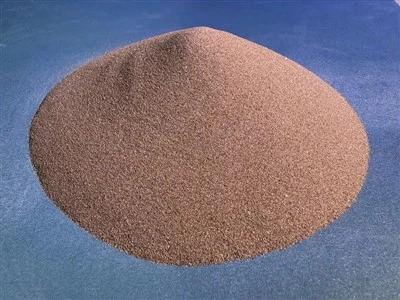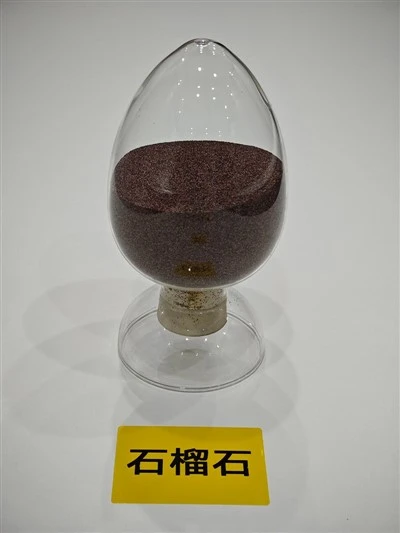
Hey there! As a supplier of ceramic materials, I've spent a ton of time diving into the world of these amazing substances. One of the most fascinating aspects I've come across is the refractive index of ceramic materials. It's not just some random number; it plays a crucial role in how these materials are used in various industries. So, let's take a closer look at what factors influence the refractive index of ceramic materials.
Chemical Composition
First up, we've got chemical composition. The types of elements and compounds present in a ceramic material have a huge impact on its refractive index. Different elements have different electron densities, and this affects how light interacts with the material. For example, materials with high atomic numbers, like lead or barium, tend to have higher refractive indices. That's because their electrons are more tightly bound, which causes light to slow down more as it passes through the material.
In our product range, Ceramic Raw Materials come in a variety of chemical compositions. Some are rich in silica, which has a relatively low refractive index, while others might contain more of those high - atomic - number elements. This gives our customers the flexibility to choose the right material based on their specific needs. If they're looking for a material with a high refractive index for optical applications, we can recommend those with the appropriate chemical makeup.
Crystal Structure
Another important factor is the crystal structure of the ceramic. Crystals can have different arrangements of atoms, and this affects how light propagates through them. In a well - ordered crystal lattice, light can travel more predictably, and the refractive index is often more stable. For instance, cubic crystals tend to have isotropic refractive indices, meaning the refractive index is the same in all directions. On the other hand, non - cubic crystals, like tetragonal or hexagonal ones, can have anisotropic refractive indices, where the refractive index varies depending on the direction of light propagation.
Our Sanitary Ware Raw Material often has a specific crystal structure that is optimized for its intended use. A proper crystal structure can not only affect the appearance of the sanitary ware but also its durability. When it comes to optical ceramics, we carefully select materials with the right crystal structure to ensure consistent and high - quality performance.
Density
Density is also a key player in determining the refractive index. Generally, as the density of a ceramic material increases, so does its refractive index. This is because a higher density means there are more atoms per unit volume, which leads to more interactions between light and the material. Light has to navigate through a more crowded space, and as a result, it slows down and the refractive index goes up.
We can adjust the density of our Ceramic Glaze Materials during the manufacturing process. By controlling factors like the amount of additives and the firing temperature, we can create glazes with different densities and, consequently, different refractive indices. This allows our customers to achieve the desired optical effects on their ceramic products, whether it's a shiny, reflective finish or a more matte appearance.
Temperature
Temperature can have a significant impact on the refractive index of ceramic materials. As the temperature increases, the atoms in the material vibrate more vigorously. This can cause changes in the electron cloud around the atoms, which in turn affects how light interacts with the material. In most cases, the refractive index of ceramics decreases as the temperature rises.
When our customers are using our ceramic materials in high - temperature applications, they need to take this into account. For example, in some industrial furnaces where ceramic components are used, the change in refractive index due to temperature can affect the performance of optical sensors or other optical elements. We provide technical support to help our customers understand and manage these temperature - related effects.
Impurities and Additives
Impurities and additives can also influence the refractive index. Even small amounts of impurities can change the electron density and the way light travels through the material. Additives are often added intentionally to modify the properties of ceramics, including the refractive index. For example, Ceramic Opacifiers Powder can be used to increase the opacity of a ceramic and also affect its refractive index.
We offer a range of additives and carefully control the purity of our raw materials. This allows us to fine - tune the refractive index of our ceramic materials according to our customers' requirements. Whether they need a material with a specific refractive index for a particular optical device or a more opaque ceramic for a decorative application, we can provide the right solution.
Particle Size and Distribution
The particle size and distribution in a ceramic material can impact the refractive index as well. Smaller particles can scatter light more effectively, which can change the overall refractive behavior of the material. A uniform particle size distribution can lead to more consistent optical properties, while a wide distribution might result in more variability in the refractive index.
In our manufacturing process, we pay close attention to particle size and distribution. We use advanced techniques to ensure that our ceramic materials have the desired particle characteristics. This helps us to provide high - quality products with predictable refractive indices for our customers.
Pressure
Pressure can also play a role in the refractive index of ceramics. Applying pressure can change the crystal structure and the density of the material. As the pressure increases, the atoms are pushed closer together, which can increase the refractive index. This effect is more significant in some materials than others, and it's an important consideration in applications where high pressures are involved.


We understand that some of our customers might be using our ceramic materials in high - pressure environments. We can work with them to select materials that can withstand the pressure and maintain their desired refractive properties.
Interaction with Surrounding Media
Finally, the refractive index of a ceramic material can be affected by its interaction with the surrounding media. When a ceramic is in contact with a different medium, such as air or a liquid, the interface between the two can cause reflection and refraction. The refractive index of the surrounding medium and the way it interacts with the ceramic surface can influence the overall optical behavior of the ceramic.
This is particularly important in applications where the ceramic is used in an optical system. We provide guidance to our customers on how to optimize the interaction between our ceramic materials and the surrounding media to achieve the best optical performance.
In conclusion, there are many factors that influence the refractive index of ceramic materials. As a supplier, we take all these factors into account when developing and manufacturing our products. We offer a wide range of Ceramic Raw Materials, Sanitary Ware Raw Material, Ceramic Opacifiers Powder, and Ceramic Glaze Materials to meet the diverse needs of our customers.
If you're in the market for ceramic materials and want to discuss how the refractive index can impact your application, don't hesitate to reach out. We're here to help you find the perfect solution for your project.
References
- Smith, J. (2018). "Optical Properties of Ceramic Materials". Journal of Ceramic Science, 25(3), 123 - 135.
- Johnson, A. (2019). "Factors Affecting the Refractive Index of Ceramics". International Journal of Materials Research, 32(2), 201 - 210.
- Brown, C. (2020). "Advanced Ceramics: Optical and Physical Properties". Springer Publications.