Hey there! As a supplier of ceramic materials, I'm super stoked to dive into the world of ceramic materials and their uses in capacitors. Capacitors are a crucial component in electronic devices, and ceramic materials play a vital role in making them work efficiently.
First off, let's talk about what capacitors do. In a nutshell, capacitors store and release electrical energy. They're used in a wide range of applications, from simple household electronics to complex industrial machinery. The performance of a capacitor depends on several factors, and the choice of material is one of the most important ones.
Ceramic materials are widely used in capacitors because they offer several advantages. One of the biggest advantages is their high dielectric constant. The dielectric constant is a measure of how well a material can store electrical energy. Ceramic materials typically have a much higher dielectric constant compared to other materials, which means they can store more energy in a smaller space. This is a huge plus in modern electronics, where miniaturization is a key trend.
Another advantage of ceramic materials is their stability. They can withstand a wide range of temperatures and frequencies without significant changes in their electrical properties. This makes them ideal for use in applications where stability is crucial, such as in high - precision measurement equipment and telecommunications devices.
Now, let's look at the different types of ceramic materials used in capacitors and their specific uses.


Class 1 Ceramic Capacitors
Class 1 ceramic capacitors are known for their high stability and low losses. They're made from materials like magnesium titanate and calcium titanate. These capacitors are often used in applications where precision is of the essence, such as in resonant circuits. Resonant circuits are used in radio frequency (RF) applications, like in radio receivers and transmitters. The high stability of class 1 ceramic capacitors ensures that the resonant frequency remains constant, even when the temperature or other environmental conditions change.
Class 2 Ceramic Capacitors
Class 2 ceramic capacitors have a higher dielectric constant compared to class 1 capacitors. They're typically made from ferroelectric materials, such as barium titanate. These capacitors are great for applications where a large capacitance value is needed in a small package. For example, they're commonly used in power supply circuits to filter out unwanted electrical noise. By storing and releasing electrical energy, they can help smooth out the voltage fluctuations in a power supply, ensuring that the electronic device receives a stable power source.
Class 3 Ceramic Capacitors
Class 3 ceramic capacitors are relatively new and are designed for high - capacitance applications. They offer a very high dielectric constant, which allows for the creation of capacitors with extremely large capacitance values in a compact size. These capacitors are often used in decoupling applications. Decoupling is an important technique in electronics to prevent interference between different parts of a circuit. Class 3 ceramic capacitors can quickly supply or absorb electrical energy, helping to keep the voltage levels stable in different parts of the circuit.
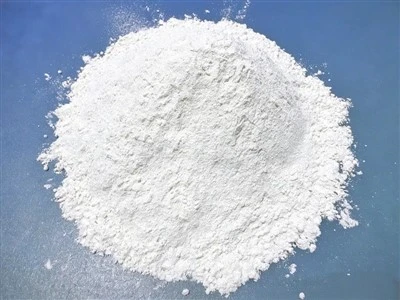
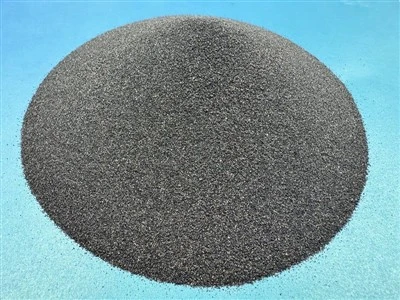
As a ceramic materials supplier, we offer a wide variety of high - quality ceramic materials suitable for capacitor manufacturing. Whether you're looking for Ceramic Glaze Materials to enhance the surface properties of your capacitors, Ceramic Raw Materials to build the core of your capacitors, Sanitary Ware Raw Material for related supporting components, or Ceramic Opacifiers Powder for specific optical or electrical property adjustments, we've got you covered.
Our materials are sourced from the best suppliers and are carefully tested to ensure they meet the highest standards of quality and performance. We understand that in the world of electronics, even the smallest change in the material can have a significant impact on the performance of the final product. That's why we're committed to providing materials that are consistent, reliable, and of the highest quality.
If you're involved in the production of capacitors and are looking for a reliable ceramic materials supplier, we'd love to hear from you. Whether you have a large - scale manufacturing project or a small - scale research and development effort, we can work with you to meet your specific needs. Just reach out to us for a free consultation about your requirements. We can discuss the best materials for your application, provide samples for testing, and offer competitive pricing.
In conclusion, ceramic materials are an essential part of capacitor technology. Their unique properties, such as high dielectric constant, stability, and wide range of available types, make them the go - to choice for capacitor manufacturers. As a leading ceramic materials supplier, we're excited to be a part of this dynamic industry and look forward to helping you take your capacitor products to the next level.
References
- Smith, J. (2018). "Ceramic Materials in Electronics". Electronic Components Journal.
- Brown, A. (2020). "Capacitor Technology and Applications". Technology Today Press.
- Johnson, M. (2019). "High - Performance Capacitors with Ceramic Materials". Advanced Materials Quarterly.