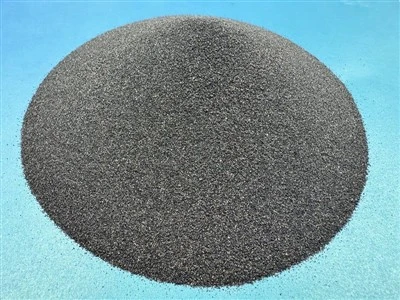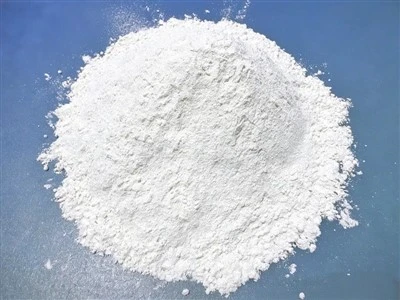
As a supplier of Garnet Abrasive Grit, I've had the privilege of witnessing the evolution and application of various abrasive materials in the industrial landscape. In this blog, I'll delve into how Garnet Abrasive Grit stacks up against other natural abrasive grits, exploring their properties, applications, and environmental impacts.
Physical and Chemical Properties
Let's first examine the physical and chemical characteristics of Garnet Abrasive Grit and other natural abrasives. Garnet is a group of silicate minerals with a hardness ranging from 6.5 to 7.5 on the Mohs scale. This hardness makes it suitable for a wide range of abrasive applications. It has a blocky, angular shape, which provides excellent cutting ability and surface finish.
In contrast, other natural abrasive grits like quartz have a hardness of around 7 on the Mohs scale. Quartz is widely available and relatively inexpensive, but its angularity is not as well - defined as that of garnet. This can result in a less efficient cutting action and a rougher surface finish in some applications.
Another natural abrasive is emery, which is a mixture of corundum and magnetite. Emery has a hardness similar to garnet, but its composition can vary significantly, leading to inconsistent performance. Garnet, on the other hand, has a more uniform composition, which ensures consistent quality and performance in abrasive applications.
Applications
Metalworking
In metalworking, Garnet Abrasive Grit is highly valued for its ability to provide a smooth and precise finish. When used in sandblasting, it can remove rust, paint, and scale from metal surfaces without causing excessive damage to the underlying metal. Its angular shape allows for efficient cutting, and its hardness ensures a long service life.
Other natural abrasives may not be as effective in metalworking. For example, quartz may break down more quickly during sandblasting, leading to frequent replacement and increased costs. Emery, due to its inconsistent composition, may not provide a uniform finish on metal surfaces.
Woodworking
Garnet Abrasive Grit is also popular in woodworking. It can be used for sanding wood to achieve a smooth and even surface. Its hardness allows it to cut through the wood fibers effectively, while its blocky shape prevents it from clogging easily.
Natural abrasives like pumice, which is a volcanic rock, are sometimes used in woodworking. However, pumice is relatively soft compared to garnet, and it may not be able to cut through the wood as efficiently. This can result in longer sanding times and a less smooth finish.
Stone Polishing
When it comes to stone polishing, Garnet Abrasive Grit can be used to achieve a high - gloss finish on various types of stones. Its hardness and angularity allow it to remove small irregularities on the stone surface, leaving a smooth and shiny appearance.
Some other natural abrasives, such as feldspar, may not be as effective in stone polishing. Feldspar is softer than garnet, and it may not be able to produce the same level of shine and smoothness on stone surfaces.
Environmental Impact
One of the significant advantages of Garnet Abrasive Grit is its relatively low environmental impact. Garnet is a natural mineral that is abundant in the earth's crust. It is non - toxic and does not release harmful chemicals during use. After use, garnet can be recycled and reused in many cases, reducing waste.
In contrast, some other natural abrasives may have a higher environmental impact. For example, some forms of emery may contain heavy metals, which can pose a risk to the environment and human health if not properly managed. Additionally, the extraction and processing of some natural abrasives may require significant amounts of energy and water, contributing to environmental degradation.
Cost - effectiveness
While the initial cost of Garnet Abrasive Grit may be higher than some other natural abrasives, its long service life and high efficiency often make it more cost - effective in the long run. In applications where a high - quality finish is required, the use of garnet can reduce the need for rework, saving both time and money.
For example, in a sandblasting operation, using a lower - quality natural abrasive may result in more frequent abrasive replacement and longer processing times. This can lead to increased labor costs and overall operating expenses. On the other hand, Garnet Abrasive Grit can provide a more consistent and efficient performance, reducing these costs over time.
Related Products
If you're interested in other products related to abrasives, we also offer Ilmenite Concentrate Powder, Abrasive Garnet Sand, Anatase Titanium Dioxide, Garnet Fine Powder, and Ilmenite Fine Powder. These products have their own unique properties and applications, and they can complement the use of Garnet Abrasive Grit in various industries.
Conclusion
In conclusion, Garnet Abrasive Grit offers several advantages over other natural abrasive grits. Its superior hardness, angular shape, consistent composition, and low environmental impact make it a preferred choice for many abrasive applications. While other natural abrasives may have their own uses, garnet stands out in terms of performance, quality, and cost - effectiveness.
If you're in the market for high - quality abrasive materials, I encourage you to consider Garnet Abrasive Grit. We are committed to providing our customers with the best products and services. If you have any questions or would like to discuss your specific requirements, please feel free to contact us for a procurement discussion.


References
- ASTM International. (2023). Standard Specification for Abrasive Grits and Grains.
- Mineralogical Society of America. (2022). Mineral Properties and Applications.
- Industrial Abrasives Association. (2021). Abrasive Materials and Their Uses.